



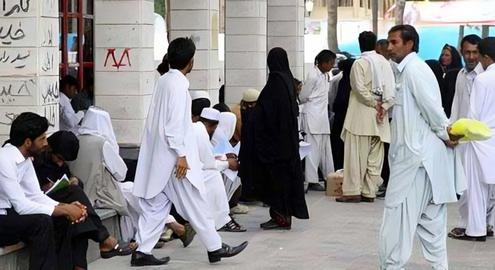
Iran’s Sunni community is diverse, comprising followers of various Islamic schools of thought, including Shafi'i, Hanafi, Maliki, and Hanbali.
Many Kurds in western Iran follow the Shafi'i school, while Baluch and Turkmen communities predominantly adhere to Hanafi jurisprudence.
Religious and legal diversity is not limited to Sunnis - Shia Muslims also follow different branches. While Twelver Shiism is Iran’s official religion, other Shia sects, such as Zaidi, Ismaili, and Sheikhism, have existed both within Iran and across the Islamic world.
However, the Islamic Republic’s media and propaganda often ignore this diversity, instead promoting a one-sided, stereotypical image of Iran’s Sunni community using labels like “Salafi,” “Wahhabi,” or “Takfiri.”
This occurs despite the fact that extreme Salafism is largely foreign to the religious and cultural traditions of most Iranian Sunni Muslims.
These stereotypes are part of a broader effort to portray Sunnis not as Iranian citizens with diverse beliefs but as outsiders, opponents, or even “domestic enemies.”
This narrative has fueled Sunni phobia and led to widespread discrimination against Sunnis in political, social, and cultural spheres.
The concept of a “Shia Iranian” identity is relatively recent, beginning during the Safavid era. Before that, most of Iran’s population was Sunni. While some Shia governments existed, they were limited in both geography and duration.
The Safavids made Twelver Shiism the official religion to unify the country against the Ottoman Empire, forcing millions to convert within a few decades.
The Islamic Republic has followed a similar approach, attempting to build a Shia-centered national identity by sidelining Sunnis and portraying non-Shias as outsiders or adversaries.
This narrative persists even though many of Iran’s most celebrated cultural and literary figures - such as Hafez, Saadi, Molana Jalal ad-Din Muhammad Balkhi (also known as Rumi) and Ferdowsi - were Sunni or grew up in Sunni environments. Nevertheless, these figures are portrayed as national icons in official media and textbooks without mention of their Sunni backgrounds.
Iran’s official media rarely acknowledge the Sunni heritage of these historical figures, instead framing them as part of a Shia-Iranian identity through subtle messaging, framing, and selective representation.
Some estimates suggest that Sunnis make up about 10 percent of Iran’s population, while others claim the figure could be as high as 20 percent -between 9 to 18 million people.
In journalism, the lack of reliable official data on a minority is often seen as evidence of discrimination and oppression. Inaccurate population estimates for Iran's largest religious minority are not accidental; they are part of a deliberate effort to misrepresent the Sunni community.
Most Sunni Muslims in Iran reside in border provinces such as Kurdistan, West Azerbaijan, Sistan and Baluchistan, and Hormozgan - regions that are also among the least developed, according to official statistics.
Content about Sunnis in Iran is controlled by institutions like the Supreme Council of Cyberspace, the Islamic Republic of Iran Broadcasting (IRIB), and the Ministry of Culture - all operated by Shia officials, many of whom implement discriminatory policies.
Out of more than 150 national and local media networks in Iran, none are dedicated to representing the beliefs or conditions of the Sunni community.
While Sunni students are taught about their beliefs, rituals, and history through specialized textbooks in school, no official resources exist to educate the broader public on Sunni Islam.
At the same time, both official and unofficial propaganda outlets in the Islamic Republic regularly disseminate false, misleading, and discriminatory content about Sunnis, their leaders, and historical figures.
Websites such as "Feraq News," "AdyanNews," and "Wiki Shia" are examples of platforms that publish such content.
In the Persian year 1403 (2024–2025), more than 142,000 hate-filled posts targeting Iran’s Sunni community were shared on Persian media and social networks, a 164 percent increase compared to the previous year.
Of these, approximately 118,000 were posted on X (formerly Twitter), and more than 3,000 appeared on Instagram.
Government-affiliated websites and news agencies also published over 20,000 articles targeting Sunnis, with outlets like IRNA, ISNA, and Mehr among the most prolific contributors.
According to data from the "NationWater" tool, most of these posts originated inside Iran.
In Iranian cinema and television, Sunni characters are either absent or depicted in negative, minor, or stereotypical roles.
Historical events and stories involving prominent Sunni figures are presented through a one-sided, Shia-centric lens.
Attempts to create alternative narratives are heavily restricted, censored, or outright banned.
For instance, the government recently prohibited broadcasting and dubbing the series Muawiyah. In contrast, Shia-centered historical series such as Imam Ali and Mukhtar Nameh received substantial state funding and faced no restrictions despite objections from the Sunni community.
In the cultural and media discourse of the Islamic Republic, Sunnis are often portrayed using stereotypes such as “smuggler,” “terrorist,” “dangerous,” or “infiltrator.” They are also divided into categories of "good" and "bad" Sunnis.
A “good Sunni” is someone who accepts the official narrative, refrains from protesting against discrimination, and participates in events like “Unity Week” to help promote a positive image of the regime’s relationship with Sunnis.
The regime favors Sunni clerics who support its policies, as well as representatives of the Supreme Leader in Sunni-majority regions and groups such as the “Muslim Peshmerga” in Kurdistan.
A “bad Sunni” is someone who speaks out against discrimination and demands change. These individuals are targeted by state propaganda and labeled as “Wahhabi,” “Takfiri,” “Salafi,” “opponent,” or “separatist,” setting the stage for their repression.
One notable example is the media campaign against Maulana Abdolhamid, a prominent Sunni cleric. After a leaked document from Fars News Agency revealed that Supreme Leader Ali Khamenei had ordered security forces to "discredit" him, it became clear the government was actively targeting him.
In the past Persian year, the hashtag "#Expulsion_of_Afghans_National_Demand" appeared in 785,000 tweets on X. Over 50,000 of these came from just 10 users.
IranWire’s monitoring team reported that the campaign began in mid-December 2023 and had reached more than 118,000 tweets by 13,000 users by the end of the year. Of those users, just 10 were responsible for over 10 percent of the content.
Another study found that 50 users generated more than one-third of the tweets.
Although many of these tweets were posted early in the morning - suggesting they might have originated from outside Iran - further investigation confirmed that most were posted from within the country.
One possibility is that the tweets were part of a coordinated campaign run by a domestic network, timed to coincide with the start of office hours.
This pattern is consistent with the operations of the IRGC’s cyber headquarters, which frequently launches hate campaigns against minority communities.
Interested in writing for IranWire?
Share your stories.


comments